Why Execution Quality Matters More Than Precision Entries | Orovio Capital Group Blog
/Blog/Why Execution Quality Matters More Than Precision Entries
How the Market Really Moves: Sessions, Liquidity, and Participation
Why Execution Quality Matters More Than Precision Entries
Orovio Capital Group
January 22, 2026
Perfect entries do not create consistent traders. Execution quality does. Learn why institutions focus on efficient execution, risk control, and process rather than exact price precision.
Why Precision Entries Matter Less Than Execution Quality
Many traders spend years searching for the perfect entry. They obsess over exact price levels, pip-perfect stops, and flawless timing, believing that precision alone determines trading success.
This mindset is understandable—but from an institutional perspective, it is fundamentally misplaced.
Professional trading performance is not built on perfect entries. It is built on execution quality.
The Retail Obsession With Precision
Retail trading education often emphasizes:
Exact entry prices
Tight stop placement
“Sniper” entries with minimal drawdown
This creates the illusion that success comes from predicting the exact turning point of the market.
In reality, markets do not reward precision. They reward consistency, adaptability, and disciplined execution.
Price rarely turns at a single price. It reacts within zones shaped by liquidity, structure, and value.
Institutions operate under constraints that retail traders rarely consider.
Large position sizes cannot be entered or exited at a single price without moving the market. As a result, execution is not a moment—it is a process.
For institutions:
Entries are distributed
Exits are staged
Risk is managed continuously
Timing is aligned with liquidity
Execution quality determines whether capital is deployed efficiently or wasted through poor timing and unnecessary impact.
What Is Execution Quality?
Execution quality refers to how efficiently a trade is implemented and managed, not how perfectly it is timed.
Key components include:
Slippage control
Fill consistency
Exposure management
Timing relative to liquidity
Risk alignment with market conditions
A precise entry with poor execution can cause more damage than a slightly less accurate entry executed efficiently.
Why Poor Execution Is So Costly
Poor execution increases:
Transaction costs
Emotional pressure
Risk exposure
Decision fatigue
A trader may enter at the “perfect” level, but if:
Liquidity is thin
Slippage is high
Risk is poorly sized
Management is reactive
The trade can quickly become unmanageable.
Execution quality protects capital when conditions are imperfect—which is most of the time.
Institutions Trade Zones, Not Lines
Institutions do not expect price to reverse at an exact level.
They operate within zones of interest defined by:
Liquidity
Market structure
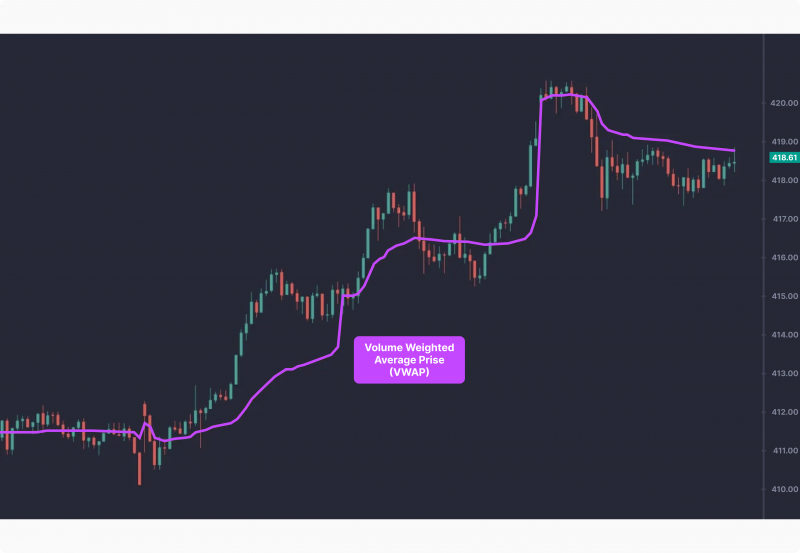
Fair value (VWAP)
Session context
These zones allow flexibility. Execution adapts to market conditions rather than forcing the market to behave precisely.
Retail traders often mistake precision for control. Institutions understand that control comes from process, not exactness.
Execution Extends Beyond Entry
One of the biggest misconceptions in trading is that the entry determines the outcome.
In reality:
Position management
Scaling decisions
Risk reduction
Exit timing
Have a far greater impact on long-term results than the initial fill.
Professional traders spend more time managing trades than entering them.
Risk Management Is Execution Quality
Execution quality is inseparable from risk management.
Institutional frameworks emphasize:
Predefined risk limits
Maximum exposure rules
Session-based participation
Drawdown controls
These rules exist to protect execution discipline, not restrict opportunity.
A trade that respects risk parameters but misses a perfect entry is far preferable to a precise entry that violates risk controls.
The Role of Timing and Liquidity
Institutions care deeply about when they trade.
Execution aligned with:
High-liquidity sessions
Active participation windows
Structural transitions
Is far more important than exact price precision.
Trading during illiquid conditions, even at a “perfect” level, often results in poor execution.
Why Restraint Is a Form of Execution Quality
One of the most overlooked aspects of professional trading is not trading.
Choosing not to participate when:
Conditions are unfavourable
Liquidity is thin
Structure is unclear
Is itself an execution decision.
Restraint protects capital, preserves focus, and maintains process integrity.
Precision Thinking vs Execution Thinking
Precision-focused thinking often leads to:
Overtrading
Frustration
Emotional attachment to entries
Reactive decision-making
Execution-focused thinking encourages:
Patience
Selectivity
Process adherence
Consistency
Professional traders do not need perfect entries. They need repeatable execution under controlled conditions.
Where Precision Still Matters
Precision is not irrelevant—it is just secondary.
Precision improves:
Risk-to-reward efficiency
Exposure control
Trade structure
But only after execution quality is secured.
Precision enhances a process. It does not replace one.
How Professionals Define Success
Professional traders define success by:
Process adherence
Risk consistency
Execution efficiency
Long-term performance
Not by how close they entered to the exact high or low.
Consistency is built through process, and execution quality is the mechanism that turns process into results.
Final Thoughts: Execution Is the Edge
Markets are dynamic, imperfect, and constantly changing.
Trying to control them through precision alone leads to frustration.
Professionals accept uncertainty and focus on what they can control:
Execution
Risk
Timing
Discipline
When traders stop asking:
How perfect was my entry?
And start asking:
How well did I execute my plan?
Their performance begins to stabilize.
In institutional trading, success is not built on precision. It is built on execution quality.
About Orovio Capital Group
A quantitative trading firm delivering institutional-grade trades powered by proprietary models and data-driven analytics, replicated in real time across client accounts.